
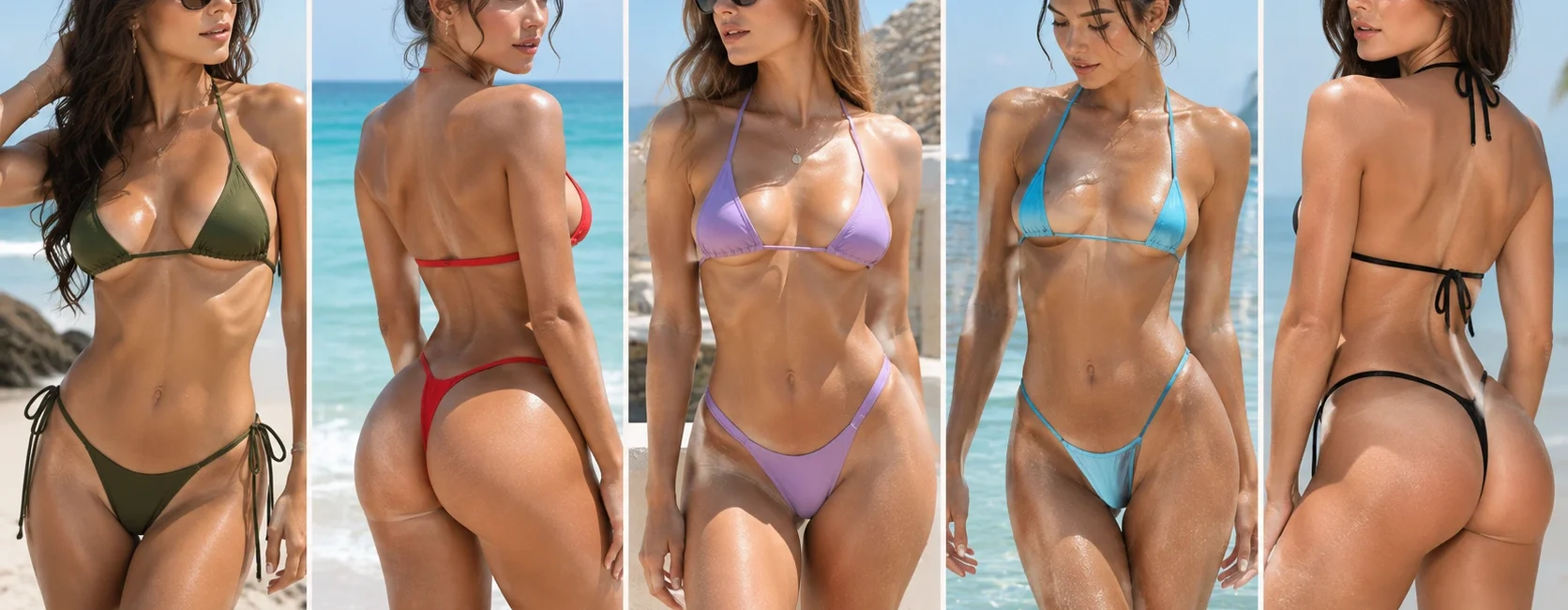
Micro bikinis have moved from a niche, editorial-only trend to one of the most-searched swimwear styles in the country and for good reason. The cut isn’t about a specific body type or a single “look”; it’s a construction style that comes in dozens of variations, fabrics, and coverage levels.
What Actually Makes a Bikini “Micro”?
“Micro bikini” isn’t one specific design it’s a category defined by reduced fabric and reduced coverage relative to a standard bikini. What separates it from other minimal cuts comes down to construction, not just size:
- Micro triangle tops use noticeably smaller fabric triangles than a standard triangle top, often paired with thin, fully adjustable ties.
- Thong or micro bottoms sit at the narrowest end of the coverage spectrum, with a thin back strap rather than full seat coverage.
- String-side construction replaces a fixed waistband with adjustable ties, which is what allows the fit to be so precise despite the minimal fabric.
It’s worth knowing where micro sits relative to other minimal cuts, since the terms get used loosely online:
| Style | Coverage Level | Best For |
|---|---|---|
| String/tie-side bikini | Moderate-minimal | All-round wear, most versatile |
| Brazilian cut | Minimal, moderate back coverage | Balanced daring without full commitment |
| Cheeky cut | Minimal, playful | A step toward micro without going all-in |
| Micro bikini | Very minimal | Sun-focused days, tanning, pool lounging |
| Thong bikini | Least coverage overall | Sun-first wear, minimal tan lines |
Is a Micro Bikini Right for Every Body Type?
Yes and this is one of the most persistent myths around the style. A micro bikini isn’t designed for a specific body type; it’s designed for anyone who wants to wear it, with styling adjustments that change how it fits different frames rather than who “qualifies” to wear it:
- Smaller or petite frames: Reduced fabric tends to stay proportionate, and string-tie sides let you adjust the exact height and fit of the bottom.
- Curvier frames: A Brazilian or cheeky cut rather than a full thong bottom adds a bit more coverage at the back while keeping the same high-cut leg line, which visually elongates the leg without sacrificing the aesthetic.
- Broader shoulders or more muscular builds: A micro top with a slightly wider band under the bust adds balance without adding bulk.
- Larger bust sizes: Look for triangle tops with reinforced ties or a slightly wider triangle rather than the absolute smallest cut, since support matters more than minimalism at this size.
The common thread across every body type: skip padding or push-up construction. Micro styles are meant to sit close to the body, and added padding tends to work against the silhouette rather than for it.
How to Get the Sizing Right (This Is the Part Most People Get Wrong)
Sizing is, by a wide margin, the biggest factor in whether a micro bikini looks intentional or accidental. Independent buyer research aggregating over a thousand verified reviews found that the overwhelming majority of negative reviews not complaints about fabric or construction, but about fit, sliding, or discomfort traced back to incorrect size selection rather than a flawed product.
A few sizing rules that consistently hold up:
- When between sizes, size up, not down. Micro construction has very little adjustment room built in; a style that’s slightly generous sits and holds better than one that’s too tight.
- Check the brand’s specific size chart, not just your usual size. Because there’s so little fabric involved, even small differences between brands make a bigger difference than they would on a standard swimsuit.
- Do a “sit and stretch” test before wearing it out, if you’re trying it on at home. A well-fitted piece should stay in place through basic movement, not just standing still.
- Prioritize adjustable ties over fixed bands. String-tie construction is what makes a truly custom fit possible at this coverage level.
- Watch for elastane content. Fabrics with a higher elastane percentage recover their shape better after stretching and swimming, which matters more here than on fuller-coverage suits.
Fabric and Construction: What Separates a Good Micro Bikini from a Cheap One
Because there’s so little fabric on a micro bikini, quality differences show up fast often within the first few wears. Look for:
- Double-layered Lycra or nylon-spandex blends, rather than single-layer fabric, which holds shape and opacity better once wet.
- Reinforced stitching at stress points ties, the junction where straps meet the fabric, and seam edges since these are the first places a lower-quality suit fails.
- UPF-rated fabric, given how much skin is exposed; this is now a standard feature on most well-made micro styles, not a premium add-on.
- Chlorine- and salt-resistant fabric treatments, which matter more for a piece you’ll likely wear repeatedly through a single season.
Crochet and textured micro styles are having a strong moment for a more relaxed, boho-beach look, but they generally offer less structural support than a Lycra-based design, so they’re better suited to lounging than active swimming.
How to Style a Micro Bikini for Different Settings
- Poolside or beach day: Worn on its own, this is the style’s most natural setting. A sarong or lightweight cover-up is easy to add for walking between spots.
- Resort or vacation styling: Pair with a sheer cover-up, kaftan, or linen shirt tied at the waist for a beach-to-bar transition without a full outfit change.
- Festival settings: Micro bikinis have become a genuine festival staple at beach-adjacent events, often layered with high-waisted bottoms, an open shirt, or statement accessories rather than worn completely on its own.
- Tanning-focused days: This is where the style genuinely outperforms fuller coverage minimal fabric means minimal tan lines, which is one of the most common reasons people choose micro over a standard cut in the first place.
Context matters more with this style than with almost any other swimwear cut what works at a beach club or resort pool isn’t necessarily the right choice for a family beach day or a conservative local pool, so it’s worth reading the room the same way you would with any bolder fashion choice.
Care Instructions
Micro bikinis see concentrated stress on a small amount of fabric, so proper care meaningfully extends their life:
- Rinse in cool water immediately after swimming, especially after chlorine or saltwater exposure, since residue left to dry breaks down elastane faster.
- Hand wash rather than machine wash whenever possible; if you do machine wash, use a mesh lingerie bag on a cold, gentle cycle.
- Never wring or twist the fabric to dry it press out excess water in a towel instead and lay flat to air dry.
- Avoid extended direct sun exposure while not being worn, since prolonged UV exposure fades color and breaks down fabric elasticity faster than regular wear does.
- Reapply sunscreen with awareness of light-colored fabric, since exposed skin around minimal coverage areas needs frequent reapplication, and some sunscreens can stain lighter fabrics.
Where to Shop by Budget
- Entry tier ($15–$40): Widely available through fast-fashion retailers; fine for a single season or occasional wear, but construction and elastane recovery tend to wear out faster.
- Mid tier ($40–$120): The sweet spot for most buyers who’ll wear a micro bikini multiple times per season double-layered fabric, reinforced ties, and better recovery after stretching.
- Premium tier ($120–$250+): Specialist swimwear brands offering handcrafted construction, sustainable fabric options like recycled nylon (ECONYL), and design details like curved pattern engineering for a closer, more secure fit.
If you wear micro styles only a handful of times a season, entry or mid tier is usually the better value. If it’s becoming a wardrobe staple, the premium tier tends to pay for itself in fit and longevity.
Frequently Asked Questions
What’s the difference between a micro bikini and a thong bikini?
They overlap, but a thong bikini specifically refers to the minimal back coverage on the bottom piece, while “micro bikini” refers more broadly to an overall reduced-fabric construction across both the top and bottom.
Do micro bikinis work for swimming, or just tanning?
They’re built primarily for tanning and lounging rather than active swimming. If you plan to move a lot in the water, a secure string or triangle style with a higher elastane percentage will hold up better than the smallest micro cuts.
How do I know if a micro bikini fits correctly?
It should feel snug without digging in, stay in place through a basic sit-and-stretch test, and require no constant readjustment. If a piece leaves deep marks or needs frequent adjusting, size up.
Is a micro bikini appropriate for a public beach or pool?
It depends on the setting. Resort pools, beach clubs, and beach-adjacent festivals are generally accepting of the style; more conservative or family-focused settings may call for a more moderate cut instead.
Do micro bikinis run small compared to regular swimwear sizing?
Often, yes. Because there’s so little margin for adjustment, most buying guides recommend sizing up if you’re between two sizes, rather than sizing down.


1 Comment
[…] Micro bikini […]