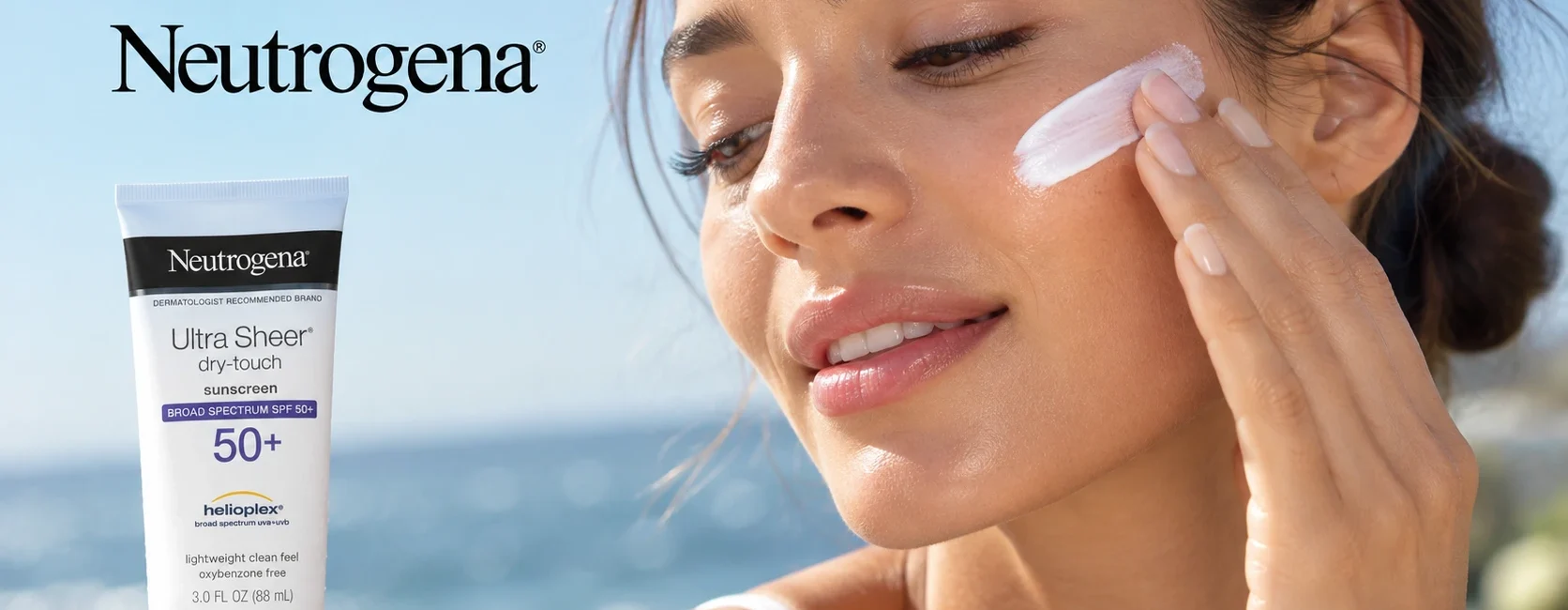
Walk down the sunscreen aisle looking for Neutrogena specifically, and you’ll find more than a dozen different lines staring back at you: Ultra Sheer, Hydro Boost, Purescreen+, Beach Defense, Sheer Zinc, Clear Face, and more. They’re not interchangeable, and picking the wrong one is the most common reason people say they “don’t like” Neutrogena sunscreen at all.
Why Neutrogena Has So Many Different Sunscreen Lines
Neutrogena, part of Johnson & Johnson and headquartered in Los Angeles, has built its sun-care catalog around solving specific problems rather than offering one universal formula. Each line is engineered around a different priority hydration, oil control, sensitivity, water resistance, or a natural finish which is exactly why the “best” Neutrogena sunscreen depends entirely on what your skin actually needs, not just which SPF number is highest.
The Main Neutrogena Sunscreen Lines, Explained
Ultra Sheer Dry-Touch
The brand’s flagship and most recognized line, built around a fast-absorbing, matte, oil-free finish. It uses a chemical UV filter system (marketed under the Helioplex and, in mineral versions, Purescreen+ technology) and is available in SPF 45, 55, and 70. This is the line most dermatologists point to as the reliable, everyday default; it layers well under makeup, doesn’t pill, and dries down within about a minute.
Hydro Boost Water Gel
A hybrid moisturizer-sunscreen built around hyaluronic acid, designed for normal to dry skin that wants hydration and SPF in a single step. The water-gel texture feels cooling on application, making it a favorite for humid climates or anyone who finds traditional lotions too heavy. It comes in SPF 50 and uses a chemical filter system.
Purescreen+ (Mineral)
Neutrogena’s 100% mineral line, built on zinc oxide and titanium dioxide rather than chemical filters. Available in tinted and untinted versions, this is the line to reach for if you have reactive or sensitive skin, since mineral filters sit on top of the skin rather than being absorbed, which generally makes them less likely to irritate. Neutrogena’s own testing reports up to 30% less white cast than competing mineral formulas, and the tinted version is specifically designed to blend across a range of skin tones without the chalky finish older mineral sunscreens were known for.
Sheer Zinc
An older, still widely available mineral line built on a straightforward 100% zinc oxide formula. It’s fragrance-free and free of parabens, phthalates, and dyes, making it a solid choice for anyone who wants a simple, minimal-ingredient mineral sunscreen without the added skincare actives found in newer lines.
Beach Defense
Built specifically for extended outdoor and water exposure, with a texture designed to resist sweat and water for up to 80 minutes. This is the line to choose over Ultra Sheer for a beach or pool day, since Ultra Sheer prioritizes an invisible daily finish over heavy-duty water resistance.
Clear Face
An oil-free, non-comedogenic formula specifically designed not to clog pores, aimed at acne-prone and blemish-prone skin. If you’ve avoided sunscreen in the past because it triggers breakouts, this is the line built to solve that specific problem.
Invisible Daily Defense
A higher-SPF (60+), serum-like lotion that dries clear on all skin tones and includes an antioxidant complex aimed at defending against environmental stressors in addition to UV rays. It’s positioned as a slightly more advanced daily-wear option than standard Ultra Sheer.
Chemical vs. Mineral: Which Type of Neutrogena Sunscreen Should You Choose?
This is the single biggest decision point across the entire catalog, and it maps directly onto which lines to consider:
| Chemical Filters (Ultra Sheer, Hydro Boost, Invisible Daily Defense) | Mineral Filters (Purescreen+, Sheer Zinc) | |
|---|---|---|
| How it works | Absorbs UV rays and converts them to heat | Sits on skin and physically reflects/scatters UV rays |
| Best for | Everyday wear, layering under makeup, oily or normal skin | Sensitive, reactive, or acne-prone skin |
| Texture | Typically thinner, faster-absorbing | Can feel slightly thicker, though newer formulas are much lighter than older mineral sunscreens |
| White cast risk | None | Reduced significantly in newer formulas, but still a consideration on deeper skin tones |
| Reapplication | Standard reapplication guidance applies | Same reapplication guidance; both types need reapplying every 2 hours |
Neither type is objectively “better”; dermatologists broadly consider both chemical and mineral filters safe and effective when used correctly. The right choice comes down to skin sensitivity and personal preference for texture and finish.
How to Choose Based on Your Skin Type
- Oily or acne-prone skin: Clear Face or Ultra Sheer Dry-Touch, both oil-free and non-comedogenic.
- Dry skin: Hydro Boost Water Gel, for the added hyaluronic acid.
- Sensitive or reactive skin: Purescreen+ or Sheer Zinc mineral formulas.
- Deeper skin tones concerned about white cast: Purescreen+ Tinted, specifically engineered to reduce the chalky finish older mineral sunscreens left behind.
- Active, sweaty, or water-based activities: Beach Defense or Ultimate Sport, both built for extended water and sweat resistance.
- Daily wear under makeup: Ultra Sheer Dry-Touch or Invisible Daily Defense, both formulated to dry down quickly without pilling.
Understanding the SPF Numbers
Neutrogena’s range spans SPF 30 to SPF 70+, and it’s worth knowing that the jump in protection isn’t linear:
- SPF 30 blocks about 97% of UVB rays
- SPF 50 blocks about 98% of UVB rays
- SPF 70+ blocks slightly over 98% of UVB rays
The difference between SPF 50 and SPF 70 is smaller in practice than the numbers suggest; consistent application and reapplication matter more for actual protection than chasing the highest number on the shelf. The American Academy of Dermatology recommends broad-spectrum SPF 30 or higher for daily use, and all of Neutrogena’s current sunscreen lines meet that threshold.
Addressing the 2021 Benzene Recall
Any thorough look at Neutrogena’s sunscreen history should address this directly rather than ignore it: in July 2021, Johnson & Johnson voluntarily recalled five aerosol sunscreen product lines Neutrogena Beach Defense, Cool Dry Sport, Invisible Daily Defense, and Ultra Sheer aerosol sprays- plus Aveeno Protect + Refresh aerosol spray after internal testing found low levels of benzene, a chemical linked to cancer risk with repeated exposure, in some samples. Importantly, the recall was limited specifically to aerosol spray formats; lotion, stick, and gel versions of these same product lines were not affected. Johnson & Johnson stated the detected levels would not be expected to cause adverse health effects even with daily use, and issued the recall as a precaution while investigating the contamination source. The recalled products were pulled from retailers nationwide, and current Neutrogena sunscreen products sold today are not subject to that recall. If you’re specifically concerned about aerosol formats, lotion, gel, and stick formulas across every current Neutrogena line sidestep the issue entirely.
Application Tips for Better Real-World Protection
- Use enough product. Most people apply far less than the amount needed for the labeled SPF to be accurate: about a nickel-sized amount for the face alone, and roughly a shot glass worth for full-body coverage.
- Apply 15 minutes before sun exposure for chemical formulas to fully bind, though mineral sunscreens work immediately on application.
- Reapply every 2 hours, and immediately after swimming or heavy sweating, regardless of which “water-resistant” line you’re using.
- Layer sunscreen last in a chemical-based routine, after moisturizer and before makeup, to avoid diluting its protective film.
- Check the expiration date. Sunscreen actives degrade over time; a bottle from two summers ago may not deliver its labeled SPF.
Frequently Asked Questions
What is the best Neutrogena sunscreen overall?
Ultra Sheer Dry-Touch remains the brand’s most broadly recommended line for daily use, thanks to its lightweight, fast-absorbing, non-greasy finish. The better answer depends on skin type: Hydro Boost for dry skin, Purescreen+ for sensitive skin, and Beach Defense for water activities.
Is Neutrogena Ultra Sheer chemical or mineral?
It’s primarily a chemical sunscreen line, using UV-absorbing filters. Neutrogena also offers Ultra Sheer Mineral variants built on zinc oxide for those who prefer a mineral formula within the same line.
Is Neutrogena sunscreen safe after the 2021 recall?
Yes. The 2021 recall was limited to five specific aerosol spray products due to low benzene levels and does not affect current lotion, gel, or stick formulas, which were never part of the recall.
What’s the difference between Hydro Boost and Ultra Sheer?
Hydro Boost is built around hyaluronic acid for added hydration and a cooling gel texture, best suited to normal or dry skin. Ultra Sheer prioritizes a fast-drying, oil-free matte finish, making it a better fit for normal to oily skin.
Do I need a higher SPF than 50?
Not necessarily. The real-world protection difference between SPF 50 and SPF 70 is small; consistent application and reapplication every two hours matter more for effective protection than the SPF number alone.