Quick answer: Which L’Oréal shampoo should I use? Pick based on your main hair concern. Dry hair: Elvive Hyaluron + Plump. Oily scalp: Elvive Hyaluron + Pure. Damaged hair: Elvive Total Repair 5 (or Total Repair Extreme for severe damage). Colored hair: Elvive Color Vibrancy or EverPure. Frizz: Elvive Extraordinary Oil. Fine or flat hair: Elvive Volume Filler. Weak, breakage-prone hair: Elvive Full Resist. Details for each are below.
L’Oréal Paris sells one of the widest shampoo lineups on the drugstore shelf, which is exactly why “which Loreal Shampoo should I use” is such a common question. Between Elvive, EverPure, and a long list of sub-ranges built around specific hair concerns, the biggest challenge usually isn’t finding a L’Oréal shampoo; it’s finding the right one out of a dozen similarly named options.
L’Oréal Shampoo Ranges: What’s Actually Available
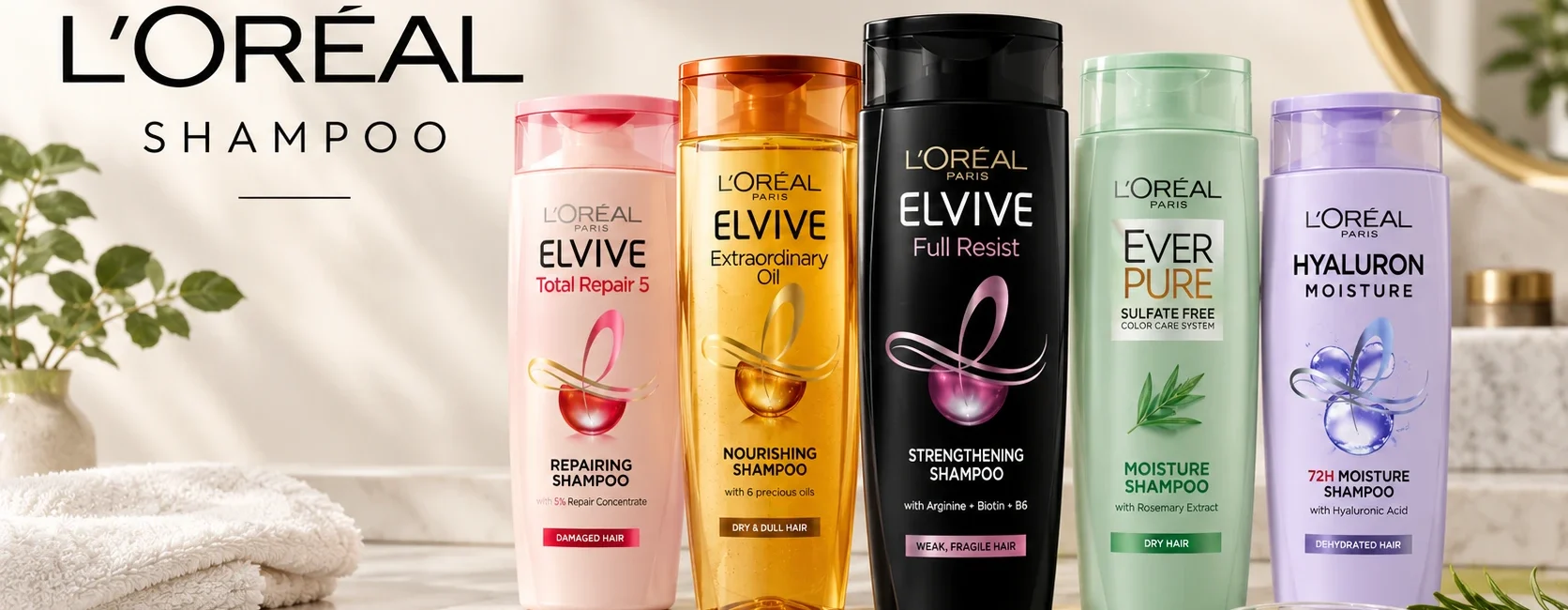
Most L’Oréal Paris shampoo sold in the U.S., UK, and Canada falls under the Elvive name, with a smaller sulfate-free line sold as EverPure. Within Elvive, the ranges are built around specific concerns rather than being one-size-fits-all:
- Elvive Hyaluron + Plump — a hydrating formula built around hyaluronic acid, designed for dry, dehydrated hair
- Elvive Hyaluron + Pure (72H Purifying) — a lighter, clarifying formula for oily roots and scalp, formulated with salicylic acid
- Elvive Total Repair 5 — a repairing shampoo for everyday damaged hair (heat styling, general wear)
- Elvive Total Repair Extreme — a stronger formula for severely damaged or over-processed hair, built around lactic AHA, wheat protein, and ceramides
- Elvive Dream Lengths — targeted at long hair, with castor oil and B-vitamins intended to help with split ends and length retention
- Elvive Color Vibrancy — designed to help protect color-treated hair and slow fading
- Elvive Volume Filler — a volumizing formula aimed at fine or thin hair
- Elvive Extraordinary Oil — an oil-infused formula for dry, unruly, or frizz-prone hair
- Elvive Full Resist — formulated with aminexil, biotin, and arginine, aimed at hair that feels weak or prone to breakage and shedding
- Elvive Bond Repair / Glycolic Gloss — sulfate-free options aimed at damage repair and shine, available in some markets under slightly different names
- EverPure Blonde — a purple-toned, sulfate-free shampoo for blonde or color-treated hair, designed to reduce brassiness
- EverPure Moisture — a sulfate-free option for dry hair that also wants gentler, color-safe cleansing
How many types of L’Oréal shampoo are there? In the Elvive and EverPure families covered here, there are about a dozen main ranges, and the exact number depends on your country because ranges are refreshed and renamed regularly.
Not every product in this list is guaranteed to be stocked in every store or every country at a given time; ranges are refreshed periodically, so it’s worth checking current availability on L’Oréal Paris’s own regional site or a major retailer before assuming a specific product is in stock locally.
A Naming Note for UK, U.S., and Canadian Shoppers
One genuine source of confusion: L’Oréal’s core hair-care range is sold under different names depending on the country. In the United States, the United Kingdom, and Canada, it’s called Elvive. In much of continental Europe, the same underlying range is sold as Elseve (and as Elvital in Germany). The formulas and product concepts are generally the same family across these names, but exact ingredient lists, packaging, and available variants can differ slightly by region, so if you’re comparing a review or ingredient list you found under “Elseve,” double-check it against the Elvive version before assuming it’s identical to what’s on the shelf in the U.S., UK, or Canada. Canadian packaging is also often bilingual (English/French), and some Canadian retailers list certain products under a “Hair Expertise” label alongside the Elvive name, though it refers to the same core range.
Not the same as L’Oréal Professionnel or Men Expert. This guide covers the drugstore L’Oréal Paris ranges (Elvive and EverPure). L’Oréal Professionnel is a separate salon-distributed brand with its own formulas, and L’Oréal Paris Men Expert is a separate men’s line. Check the label of the specific product, because ingredients and suitability differ between brands.
Which L’Oréal Shampoo Should I Use? The Best L’Oréal Shampoo for Your Hair Type
How to choose the right Loreal shampoo in three steps:
- Pick your main concern (dryness, oiliness, damage, color, frizz, thin hair, or breakage). Choose one range for that concern, not several.
- Check sulfates if your hair is color-treated, curly, or very dry. EverPure and some Elvive lines are sulfate-free.
- Add the matching conditioner from the same range, and judge the result after 3 to 4 washes.
Dry hair: Elvive Hyaluron + Plump is the most directly targeted option, built to add moisture without heaviness. Elvive Extraordinary Oil is a reasonable alternative if your hair also tends toward frizz.
Oily hair or oily scalp: Elvive Hyaluron + Pure (72H Purifying) is designed specifically for oily roots while keeping the lengths from drying out, a common issue with harsher clarifying shampoos.
Normal hair: No L’Oréal range is built only for “normal” hair, so choose by your main goal. Hyaluron + Plump is a good lightweight hydrating pick, and EverPure Moisture is a gentler sulfate-free choice. If you have no particular concern, you don’t need a repair or treatment formula.
Damaged hair (heat, general wear): Elvive Total Repair 5 is the everyday-damage option. For hair that’s been through heavier chemical processing or repeated bleaching, Total Repair Extreme is the more intensive formula.
Color-treated hair: Elvive Color Vibrancy is built to help protect color and slow fading. EverPure Moisture or EverPure Blonde are worth considering if you also want a sulfate-free formula, since sulfate-free cleansing is generally gentler on color.
Frizzy hair: Elvive Extraordinary Oil is the most frizz-focused option in the range, aimed at smoothing and adding shine without weighing hair down.
Fine or thin hair: Elvive Volume Filler is designed to add texture and volume without the heaviness that can come from richer, more emollient formulas.
Thick or coarse hair: Richer, more moisturizing formulas, Hyaluron + Plump or Extraordinary Oil, typically work better than lighter clarifying shampoos, which can leave thick or coarse hair feeling dry.
Curly or wavy hair: Look toward the more hydrating end of the range (Hyaluron + Plump, Extraordinary Oil) and consider a sulfate-free option like EverPure Moisture, since curl patterns are often more prone to dryness and frizz with stronger sulfate cleansers.
Hair that feels weak or is shedding more than usual: Elvive Full Resist is formulated to help hair feel stronger and more resistant to breakage. It’s worth noting this is a cosmetic strengthening formula, not a medical treatment for hair loss; see the FAQ below for more on that distinction.
Which L’Oréal Shampoo Is Best for Volume? (Volumizing Shampoo)
Elvive Volume Filler is the volumizing option. It benefits fine, thin, or flat hair most, because it is designed to add body without the weight of richer formulas. It is not the best choice for thick, coarse, or very dry hair, which usually does better with a hydrating shampoo. Exact ingredients differ by country, so check the label on the version sold where you live, including in the UK.
Loreal Shampoo Comparison Table
| Range | Best suited for | Main purpose | Key ingredients | Considerations |
|---|---|---|---|---|
| Hyaluron + Plump | Dry, dehydrated hair | Hydration, plumpness | Hyaluronic acid | Paraben-free; may feel light for very thick hair |
| Hyaluron + Pure (72H Purifying) | Oily roots/scalp | Clarifying, root freshness | Salicylic acid | Not meant for very dry lengths without a moisturizing conditioner |
| Total Repair 5 | Everyday damaged hair | General repair | Ceramide, protein | Good daily-damage option, less intensive than Extreme |
| Total Repair Extreme | Severely damaged/over-processed hair | Intensive repair | Lactic AHA, wheat protein, ceramides | Stronger formula; not necessary for mild damage |
| Dream Lengths | Long hair | Split-end care, strengthening | Castor oil, vitamins B3/B6 | Marketed toward length retention, not a substitute for regular trims |
| Color Vibrancy | Color-treated hair | Color protection | Antioxidant/UV-filtering ingredients | Pair with a matching conditioner for best color retention |
| Volume Filler | Fine, thin hair | Volumizing | Filling/plumping technology | Can feel like “too much” on already thick hair |
| Extraordinary Oil | Dry, unruly, frizzy hair | Smoothing, shine | Nourishing oils | Richer formula; may be heavy for fine hair |
| Full Resist | Weak, breakage-prone hair | Strengthening | Aminexil, biotin, arginine | Cosmetic strengthening, not a medical hair-loss treatment |
| EverPure Blonde | Blonde/color-treated hair | Anti-brassiness, color care | Purple pigments, UV filter | Sulfate-free; can be too toning if used daily on very light blonde |
| EverPure Moisture | Dry, color-treated hair | Gentle hydration | Sulfate-free surfactants | Milder cleanse; may need more product to feel fully clean |
Key Ingredients in L’Oréal Shampoo and How They Benefit Your Hair Type
Here is what the main ingredients do, and which hair type each suits best. Check the label of your specific product before choosing.
Sulfates (surfactants): Most conventional shampoos, including several Elvive formulas, use sulfate-based surfactants (like sodium laureth sulfate) because they cleanse effectively and create a familiar lather. They aren’t inherently harmful for most people, but they can be more stripping on color-treated, chemically processed, or naturally dry/curly hair. If that describes your hair, a sulfate-free option like EverPure or Elvive’s sulfate-free lines may feel gentler over time. Best for: oily and normal hair (sulfates); dry, curly, and colored hair (sulfate-free).
Hyaluronic acid: A humectant, meaning it helps draw and hold moisture in the hair. This is the core ingredient behind the Hyaluron + Plump range and is generally well tolerated by most hair types. Best for: dry, dehydrated hair.
Salicylic acid: An exfoliating ingredient used in the Hyaluron + Pure purifying shampoo to help manage buildup and oil at the scalp. It’s a cosmetic-level concentration, not a medicated dandruff treatment. Best for: oily scalp and root buildup.
Ceramides and proteins: Used in the Total Repair ranges to help support the hair’s outer structure after damage from heat or chemical processing. These work at the surface level to improve look and feel; they don’t reverse damage at a cellular level, and no shampoo can permanently repair hair that’s already broken. Best for: heat-styled, bleached, or processed hair.
Silicones: Many conditioning shampoos include silicones to smooth the hair surface and reduce frizz. They’re generally safe and effective for most hair types, though some people with very fine hair or those following low-buildup (“low-poo”/curly) routines prefer to limit them. Best for: frizzy, unruly hair.
Fragrance: L’Oréal shampoos are typically fragranced, which is part of the sensory experience for most users but worth checking if you have a known fragrance sensitivity or scalp irritation history.
Common Questions Answered Directly
Is L’Oréal Shampoo Good for Hair Growth?
No, L’Oréal Paris shampoo is not marketed or should be understood as a hair-growth treatment. Elvive Full Resist is formulated to help reduce breakage and support hair that already feels weak, which can help hair appear fuller over time, but this is different from stimulating new growth. If genuine hair thinning or loss is a concern, that’s worth discussing with a doctor or dermatologist rather than relying on any over-the-counter shampoo.
Is There a L’Oréal Shampoo for Dandruff?
L’Oréal Paris’s Elvive Hyaluron + Pure purifying shampoo is designed to manage oily scalp buildup and can help with mild flaking related to excess oil, but it is not a medicated anti-dandruff shampoo. Persistent, itchy, or visibly flaky dandruff, especially if it’s linked to seborrheic dermatitis, typically responds better to a medicated shampoo (containing an active like zinc pyrithione, ketoconazole, or selenium sulfide) or a dermatologist’s recommendation.
What L’Oréal Paris Shampoos Are Designed for Scalp Care, and How Effective Are They?
Elvive Hyaluron + Pure (72H Purifying) is the main scalp-focused shampoo covered here. It uses salicylic acid to help control oil and buildup at the roots. It is effective as a cosmetic cleanser for oily scalps and mild flaking from oil, but it is not a treatment for scalp conditions. Some markets also sell dedicated scalp or anti-dandruff variants, so check your regional L’Oréal Paris site. For persistent itching, flaking, or irritation, see a dermatologist.
Should You Match Shampoo and Conditioner Ranges?
It’s not strictly required, but it does make a difference. Ranges are formulated so the shampoo and conditioner work together; for example, a hydrating shampoo paired with a lightweight conditioner may under-deliver on moisture, while pairing it with the matching conditioner from the same range is more likely to give the intended result. Mixing across ranges (say, a clarifying shampoo with a rich repair conditioner) isn’t harmful, but it’s a reasonable place to start if a routine isn’t giving the results you expected.
How to Use L’Oréal Shampoo for Best Results
Most L’Oréal shampoos are formulated for regular use, but “regular” doesn’t necessarily mean daily for everyone. As a general guide:
- Oily hair/scalp: can typically tolerate daily or near-daily washing with a purifying formula
- Normal to dry hair: every other day to twice a week is often enough to avoid over-stripping natural oils
- Color-treated or chemically processed hair: less frequent washing, paired with a sulfate-free formula, generally helps preserve color and reduce dryness.
To apply, wet hair thoroughly, work a small amount of shampoo into the scalp and roots (where oil and buildup actually accumulate), then let the lather rinse through the lengths rather than scrubbing the ends directly, which can add unnecessary friction to already-vulnerable hair. Follow with the matching conditioner, applied mainly from mid-length to ends.
FAQ
Which L’Oréal shampoo should I use?
Choose by your main concern: Hyaluron + Plump for dry hair, Hyaluron + Pure for oily scalp, Total Repair 5 for damage, Color Vibrancy for colored hair, Extraordinary Oil for frizz, Volume Filler for fine hair, and Full Resist for weak, breakage-prone hair.
Which Elvive shampoo should I use?
Elvive is the main L’Oréal Paris shampoo name in the U.S., UK, and Canada. Match the range to your hair type and concern using the list above, such as Hyaluron + Plump for dry hair or Total Repair 5 for everyday damage.
Is L’Oréal shampoo good?
For most hair types, yes, L’Oréal Paris’s Elvive and EverPure ranges are widely used, drugstore-accessible, and generally well reviewed by both everyday users and beauty editors, provided you choose the formula suited to your specific hair concern rather than picking at random.
Is L’Oréal shampoo good for your hair?
It can be, if you pick the right formula. Choose a range that matches your hair type, rinse well, and use the matching conditioner. Sulfate-based formulas can feel stripping on dry, curly, or colored hair, in which case a sulfate-free option like EverPure is the gentler choice.
Which L’Oréal shampoo is best?
There’s no single “best” formula; it depends on hair type and concern. Hyaluron + Plump is a strong default for dry hair, Total Repair 5 for general damage, and Volume Filler for fine or thin hair.
Are there any L’Oréal Paris shampoos specifically formulated for dry hair?
Yes. Elvive Hyaluron + Plump and Elvive Extraordinary Oil are both formulated for dry hair, and EverPure Moisture is a sulfate-free option. They are available in the U.S., UK, and other markets, though stock varies.
Is L’Oréal shampoo good for dry hair?
Yes, Elvive Hyaluron + Plump and Extraordinary Oil are both formulated specifically for dry hair.
Which L’Oréal shampoo is best for frizzy hair?
Elvive Extraordinary Oil is the most frizz-targeted option, designed to smooth and add shine.
Which L’Oréal shampoo is best for oily hair?
Elvive Hyaluron + Pure (72H Purifying), which is formulated with salicylic acid to manage oily roots without over-drying the lengths.
Are there specific L’Oréal shampoos for different hair types or concerns, such as dandruff or thinning hair?
Yes. L’Oréal Paris builds its ranges around concerns such as dryness, oiliness, damage, color, frizz, and volume. For thinning or breakage-prone hair, there is Elvive Full Resist, which is cosmetic, and for oily scalps with mild flaking, there is Hyaluron + Pure. Neither is a medicated treatment for dandruff or hair loss, so see a doctor or dermatologist for persistent problems.
Which hair types benefit most from L’Oréal Paris volumizing shampoo?
Fine, thin, and flat hair benefits most from Elvive Volume Filler. Thick, coarse, or very dry hair usually does better with a more hydrating shampoo.
Which hair types benefit most from L’Oréal Paris sulfate-free shampoo?
Color-treated, dry, curly, and chemically processed hair. Sulfate-free cleansing is generally gentler, which helps with dryness and color fade. If your hair is oily, a sulfate-based shampoo usually cleans better. The sulfate-free options are the EverPure range and select Elvive lines.
Does L’Oréal Paris have a hair oil, and which suits my hair type?
The Elvive Extraordinary Oil range includes oil-infused products for dry, frizzy or unruly hair. Fine hair should use oils sparingly, on the ends only, because richer formulas can weigh it down.
What are the key ingredients in L’Oréal men’s shampoos?
Men’s shampoos are sold under a separate line, L’Oréal Paris Men Expert, and ingredients vary by variant. Check the label for what each targets, such as anti-dandruff or hydration. The ingredient guide above applies to the Elvive and EverPure ranges.
Is L’Oréal shampoo suitable for daily use?
It depends on the formula and your hair type. Purifying formulas are generally fine for daily use on oily hair; richer, more hydrating formulas are usually better suited to less frequent washing.
Can I use L’Oréal shampoo on any hair type?
Yes, L’Oréal shampoo is made for general use, but results are best when the formula matches your hair type. Patch test if you have a sensitive scalp or fragrance sensitivity.
Does L’Oréal shampoo contain sulfates?
Some do, and some don’t. Many core Elvive formulas use sulfate-based cleansers, while the EverPure range and select Elvive lines (such as Bond Repair and Glycolic Gloss formulas) are sulfate-free.
Can I mix different L’Oréal shampoo and conditioner ranges?
Yes, it’s not harmful, but pairing a shampoo with its matching conditioner from the same range generally gives more consistent, predictable results than mixing across ranges.
Final Word
With as many sub-ranges as L’Oréal Paris offers, the fastest way to a good result isn’t trying several products at random; it’s matching the formula to your actual hair concern, understanding what the core ingredients are doing, and being realistic about what a drugstore shampoo can and can’t fix. Used that way, the L’Oréal shampoo lineup covers most common hair types and concerns reasonably well across the U.S., UK, and Canadian markets.


1 Comment
[…] you will never stand at and it is someone else’s hair. Face shape narrows the field, but your hair type makes the final call, because it decides whether the cut you want is one you can actually wear on a […]