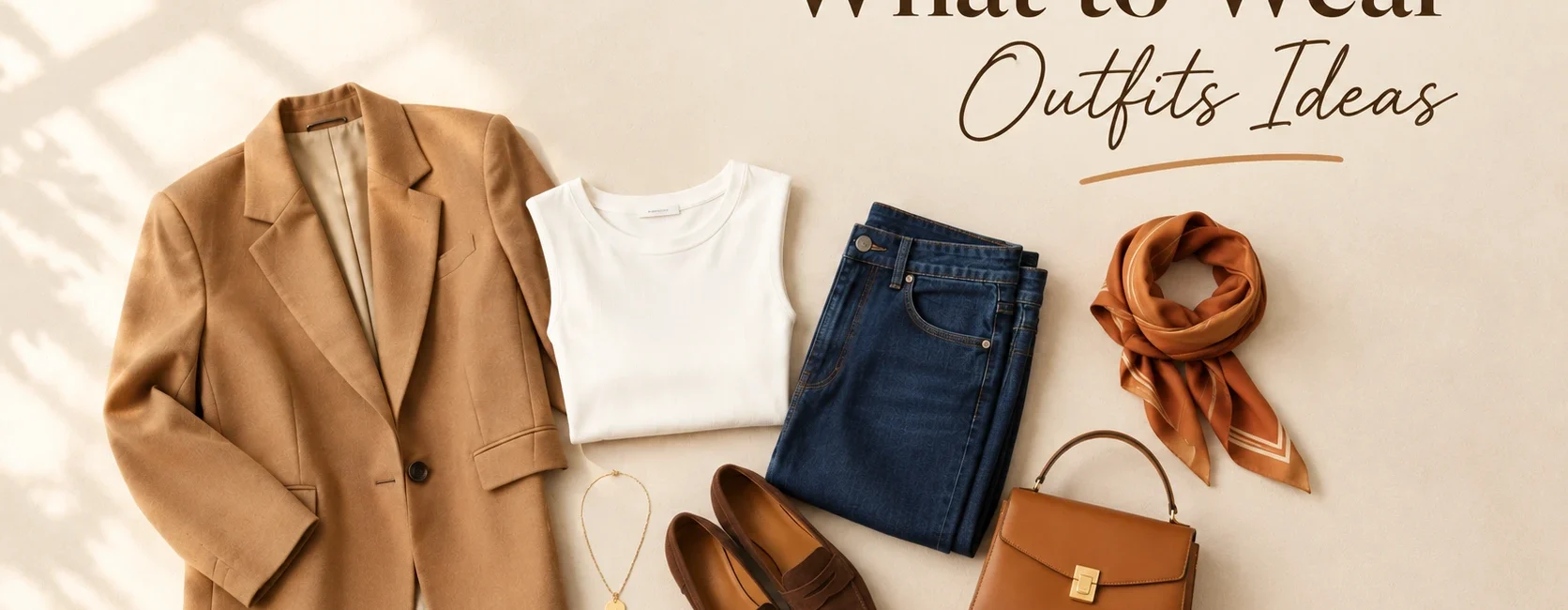
Staring at a full closet and still feeling like what to wear is one of the most common and most avoidable style frustrations out there. The fix usually isn’t more clothes. It’s a system: a small number of reliable formulas you can apply to almost any occasion, plus a clear sense of what each specific setting actually calls for.
The One Formula That Makes Any Outfit Work
Before getting into specific occasions, it helps to understand the logic behind a put-together outfit, because the same basic structure repeats everywhere:
Fitted piece + structured piece + one point of polish.
That’s it. A fitted top balances a relaxed bottom (or vice versa), a structured layer blazer, jacket, cardigan adds shape, and one intentional detail (a belt, a bag, jewelry, a rolled sleeve, a tuck) signals that the outfit was chosen, not thrown on. Almost every outfit idea below is a variation of this same formula applied to a different setting.
Easy Outfit Ideas by Occasion
Work and the Office
Tailored trousers or a midi skirt, a simple fitted top, and a blazer is close to universal for office dress codes, from strict business formal to relaxed business casual. Swap heels for loafers or clean flats depending on how formal your workplace actually is most offices today lean more casual than people assume. A single accessory (a structured bag or a watch) is usually enough polish; office dressing rewards restraint.
Casual Everyday and Weekend
Well-fitting jeans, a simple top, and sneakers or ankle boots covers errands, coffee, and casual hangouts. Adding an open jacket, oversized cardigan, or utility layer instantly makes it look more finished without adding effort. This is also where the formula flexes easiest swap the structured layer for a denim jacket, and the same base outfit works for a dozen different casual moments.
Date Night
This is where you can lean into a slightly dressier version of the same formula: a slip dress or a fitted top with a skirt, one statement accessory (bold earrings, a bag, a bold lip), and shoes with a bit more presence than daytime flats. If dresses aren’t your thing, a well-fitted top tucked into tailored pants with heeled boots hits the same note.
Wedding Guest
Wedding guest dressing has one hard rule: avoid white/ivory and anything the bride would reasonably wear. Beyond that, a midi or knee-length dress in a color that suits the season (florals and pastels for spring/summer, deeper jewel tones or richer neutrals for fall/winter) is the safest, most flattering default. Check the invitation for a stated dress code before finalizing “black tie,” “cocktail,” and “casual” call for genuinely different levels of formality, and guessing wrong is one of the most common wedding-guest mistakes.
Travel Days
Comfort and layering matter most here. A stretch legging or relaxed trouser, a soft long-sleeve top, and a lightweight jacket or oversized cardigan handle temperature swings between security lines, planes, and your destination. Slip-on shoes make security faster, and one crossbody or tote keeps your hands free. This is one occasion where the formula shifts slightly comfort takes priority over structure, but a single polished piece (a good jacket, a nice bag) still keeps the whole look from reading as sloppy.
Job Interviews
Slightly more conservative than typical office wear: a blazer, tailored trousers or a knee-length skirt, and closed-toe shoes. Stick to neutral or muted colors and minimal jewelry so the focus stays on the conversation. When in doubt, it’s better to be slightly overdressed than underdressed for a first interview.
When You Don’t Know the Dress Code
Default to smart casual: tailored pants or a midi skirt, a clean top, and closed-toe shoes. It’s polished enough to hold up in most semi-formal settings and can be dressed down with simpler accessories if the event turns out to be more relaxed than expected. This single combination solves more “I don’t know what to wear” moments than any other outfit idea in this guide.
Build a Small Wardrobe That Covers All of the Above
You don’t need a large closet to cover every occasion above you need a handful of pieces that combine well with each other. A practical starting set:
- One tailored blazer (works for office, interviews, date night, and dressing up jeans)
- One well-fitting pair of dark, straight or slightly wide-leg jeans
- One pair of tailored trousers in a neutral shade
- One versatile dress (midi length, solid or subtle print) that can go from wedding guest to date night with a shoe and accessory swap
- One structured bag and one crossbody bag
- Two pairs of shoes that cover most levels of formality: a clean flat or loafer, and one dressier heel or boot
- One lightweight jacket or cardigan for layering
Every outfit idea in this guide can be built from some combination of that list the goal is fewer, more flexible pieces rather than a separate outfit bought for every event.
What’s Current Right Now (Fall 2026 Notes)
If you want your outfit choices to feel current rather than dated, a few notes from this season are worth knowing: trench coats remain a strong layering staple, with navy and chocolate brown trending alongside the classic beige; suede loafers and boots (especially in dark chocolate tones) are having a real moment; and comfortable, movement-friendly tailoring is replacing stiffer, more rigid suiting. None of this changes the core formula above it just gives you a natural, low-effort way to update pieces you likely already have.
Quick Fit and Styling Tips That Instantly Elevate Any Outfit
- Fit before trend. A well-fitting basic outfit will always look more put-together than a trendy piece that doesn’t fit properly.
- Tuck or half-tuck. Defining your waist even loosely makes almost any top-and-bottom combination look more intentional.
- One statement, not five. Pick a single focal point (bag, shoe, jewelry, or color) rather than layering multiple loud choices at once.
- Match formality, not just color. A casual sandal will undercut an otherwise dressy outfit faster than a slightly “wrong” color will.
- Comfort is part of styling. An outfit you’re tugging at all night reads as less confident than one you’re not thinking about comfort and polish aren’t opposites.
FAQ
What’s an easy outfit that works for almost any occasion?
A well-fitted pair of dark jeans, a simple top, and a blazer. It dresses up with heels for evening or down with sneakers for daytime, and works for work, casual outings, and some evening events.
What should I wear if I don’t know the dress code?
Default to smart casual: tailored pants or a midi skirt, a clean top, and closed-toe shoes. It holds up in most semi-formal settings and can be simplified if the event is more casual than expected.
How do I make a simple outfit look more put together?
Focus on fit first, then add one intentional detail a tuck, a belt, rolled sleeves, or a single statement accessory.
What should I avoid wearing as a wedding guest?
Avoid white or ivory, and anything that could be mistaken for overly formal bridal-party attire. Always check the invitation for a stated dress code first.
Do I need a lot of clothes to have outfit ideas for every occasion?
No. A small set of versatile pieces one blazer, one pair of good jeans, one pair of tailored trousers, one flexible dress, and two pairs of shoes can be combined to cover nearly every occasion in this guide.
Final Word
Getting dressed doesn’t have to be a daily dilemma. Once you understand the basic formula behind a put-together outfit a fitted piece, a structured piece, and one point of polish and know what each occasion actually calls for, “what to wear” stops being a source of stress and becomes something closer to a quick, repeatable habit.