
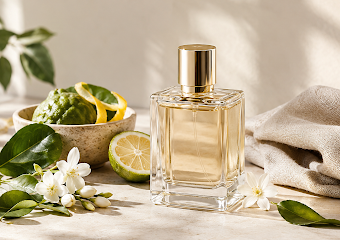
Perfume is often treated as the finishing touch to an outfit, but fragrance can be much more personal than an accessory. A familiar scent may remind us of a particular place, bring back a memory, or help us feel prepared for the day ahead. Just as clothing changes with the weather and occasion, fragrance preferences can change with our surroundings, activities, and moods.
This is where the idea of a fragrance wardrobe becomes useful. Instead of searching for one perfume that works perfectly in every situation, you can gradually build a small collection of scents that serve different purposes. The goal is not to own dozens of expensive bottles. It is to understand what you enjoy, choose fragrances thoughtfully, and make the most of what you already have.
Whether you are new to perfume or simply want to make better choices, learning how fragrance families, scent development, weather, and personal preferences work together can make the experience far more rewarding.
Tasbiha Mk is a beauty and lifestyle writer interested in fragrance, personal style, and everyday self-care. Their work focuses on helping readers understand beauty topics through practical advice, thoughtful research, and accessible explanations.
What Is a Fragrance Wardrobe?
A fragrance wardrobe is a collection of perfumes selected for different occasions, environments, seasons, or personal preferences. Think of it as a flexible alternative to relying on a single signature scent.
For example, you might prefer a fresh citrus fragrance for daytime activities, a soft floral scent for social gatherings, and a warm woody perfume for cooler evenings. Each fragrance offers a different experience without requiring you to change your overall personal style.
There are no strict rules about how many perfumes a wardrobe should contain. Two or three well-chosen options may be enough for one person, while another may enjoy exploring a wider variety.
The most useful fragrance wardrobe is built around your actual routine. Consider where you spend your time, which scents you naturally enjoy, and whether you prefer something subtle or noticeable. These questions provide a better starting point than buying a perfume simply because it is popular.
1. Understand the Main Fragrance Families
Learning a few basic fragrance families can help you identify scents that suit your preferences. Although perfumes often combine several families, most have a noticeable overall character.
Fresh and Citrus Fragrances
Fresh fragrances often feature citrus, green, aquatic, or aromatic impressions. Notes such as bergamot, lemon, mandarin, mint, and certain herbs can create a bright, clean opening.
These scents may appeal to people who prefer a lighter-feeling fragrance for daytime wear, casual outings, or warm weather. However, freshness does not automatically mean a perfume will be subtle or short-lasting. The complete formula determines how the fragrance develops and projects.
Floral Fragrances
Floral perfumes can range from delicate and airy to rich and dramatic. Rose, jasmine, orange blossom, violet, and other floral materials may appear individually or as part of a complex composition.
A soft floral fragrance can work well for everyday wear, while a more intense floral composition may suit an evening event. The important distinction is not simply whether a perfume contains flowers, but how those notes interact with woods, musk, citrus, spices, or other ingredients.
Woody and Earthy Fragrances
Woody fragrances often feature cedarwood, sandalwood, vetiver, patchouli, or related aromatic materials. Depending on the composition, they may feel dry, creamy, earthy, smoky, or smooth.
These scents can be appealing when you want something with depth and structure. They are not limited to winter or formal occasions, either. A light woody fragrance can be comfortable for daytime use, while a richer composition may suit cooler evenings.
Amber, Spicy, and Gourmand Fragrances
Warm fragrance styles can include vanilla, resins, spices, balsamic accords, and gourmand impressions reminiscent of chocolate, caramel, or other edible treats.
They often create a sense of richness and warmth, although individual compositions vary considerably. Some are soft and comforting, while others are bold and attention-grabbing.
Rather than assuming that a fragrance family suits a particular gender or age group, focus on how it smells to you and how comfortably it fits your daily life.
2. Choose Fragrances for Different Seasons
Weather can influence how a fragrance is experienced. Temperature, humidity, airflow, and the environment all affect how noticeable a scent feels, although no single rule applies to every perfume.
Spring: Explore Green and Floral Scents
Spring can be a good opportunity to explore fragrances with green, floral, citrus, or lightly aromatic characteristics. These profiles may complement the season’s fresh atmosphere without feeling overly heavy.
Consider combinations such as bergamot with green tea, rose with soft musk, or delicate florals balanced by light woods. You do not need to buy a new fragrance every spring; revisiting a perfume you already own may be enough.
Summer: Consider Fresh, Balanced Compositions
In warm weather, a fragrance that feels comfortable at a lower application level may be preferable, especially in crowded spaces or workplaces.
Citrus, aromatic herbs, and fresh floral compositions are common starting points. Still, a summer fragrance does not have to smell aquatic or lemony. A restrained woody or softly musky scent can work just as well if you enjoy it.
Pay attention to the setting. An outdoor gathering may allow for a different fragrance experience than a small, air-conditioned office.
Autumn: Try Woods, Spices, and Soft Amber
Autumn often inspires interest in woody, spicy, earthy, and gently sweet compositions. Notes such as cedar, cardamom, patchouli, and vanilla can create a sense of depth.
This is also a useful season to experiment with fragrances you previously found too rich in hot weather. Changing temperatures may alter your experience of a scent, but personal preference remains more important than seasonal trends.
Winter: Explore Richer and Deeper Scents
Cooler weather can be a comfortable setting for exploring amber, woods, spices, and richer floral compositions. Their character may feel especially inviting during evening gatherings or outdoor activities.
However, winter does not require a strong perfume. A lighter fragrance can remain a perfectly suitable choice, particularly when you spend most of your time indoors.
3. Match Your Fragrance to the Occasion
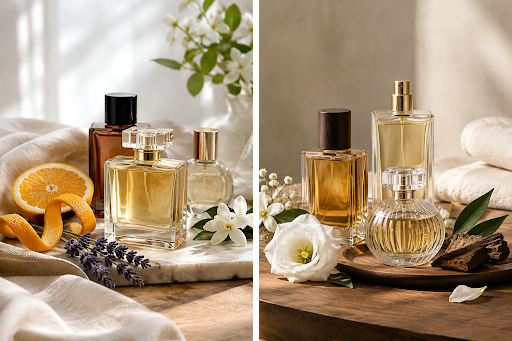
A practical fragrance wardrobe considers not only the weather but also the people and places around you.
For work or study: Consider a fragrance that stays close to the skin and does not dominate a shared space. Light florals, restrained woods, and fresh aromatic scents are possible starting points.
For casual outings: Choose something that makes you feel comfortable and reflects your personal taste. A citrus fragrance, a soft musk, or a relaxed woody scent may fit your routine.
For formal events: You might prefer a fragrance with more depth or a distinctive combination of floral, woody, spicy, or amber notes. Test it beforehand so you know how it develops and how noticeable it becomes.
For evening occasions: Richer or more expressive compositions may suit your preference, but stronger is not necessarily better. A balanced scent can be memorable without filling an entire room.
For travel: A small, securely closed travel-size container can be convenient, provided it complies with the relevant transport rules. Keeping your fragrance routine simple also means fewer bottles to pack.
The guiding principle is consideration. Fragrance is experienced by other people, too, so application should reflect the setting rather than the desire to make the strongest possible impression.
4. Learn How Perfume Changes Over Time
One reason fragrance shopping can be confusing is that a perfume may smell different immediately after application than it does later.
Perfumers commonly describe this development through top, heart, and base notes. These categories are useful guides rather than completely separate stages.
Top notes create much of the initial impression and often include relatively volatile materials such as citrus or fresh aromatics. Heart notes become more prominent as the opening settles and may include florals, spices, or other central elements. Base notes contribute depth and can remain noticeable later in the fragrance’s development.
The materials do not necessarily appear one after another in perfectly separate stages. Their aromas overlap, and the overall composition influences what you notice.
This explains why a quick spray in a shop may not provide enough information to judge a perfume. A fragrance that initially seems sharp may become softer, warmer, or more floral after some time.
To evaluate a scent, try it on a suitable test strip first. If you like the initial impression, test it on your skin according to the product’s directions. Revisit it after a reasonable interval and again later in the day. This gives you a more useful picture of its character than the first few seconds alone.
For an accessible explanation of fragrance and potential reactions, consult DermNet’s overview:
5. Test Before You Commit to a Full Bottle
Buying a perfume based on a description, a social media recommendation, or someone else’s experience can be disappointing. Fragrance preferences are personal, and the same composition may be perceived differently by different people.
Whenever possible, sample a fragrance before purchasing a full bottle. Try not to test too many perfumes at once, as repeated smelling can make it harder to distinguish individual scents.
A simple fragrance journal can help. Record the perfume’s name, its main notes, your first impression, how it develops, and whether you would enjoy wearing it regularly.
Also consider practical details such as bottle size, price per millilitre, and how frequently you expect to use it. A smaller bottle may be a more sensible choice if you are still exploring your preferences.
There is no need to rush. Allowing yourself time to understand a fragrance can be more satisfying than collecting bottles that rarely get used.
6. Make Your Fragrance Last Through Proper Storage
Storage habits can affect how well a perfume maintains its original character. Frequent exposure to heat, light, and changing environmental conditions may contribute to deterioration over time.
Keep bottles tightly closed and store them in a cool, dry place away from direct sunlight. A bedroom drawer or closed cupboard may be more suitable than a sunny windowsill or a frequently humid bathroom.
Avoid leaving perfume in a hot car or near a heat source. These environments can expose a fragrance to conditions that are less suitable for storage.
It is also worth keeping the original packaging if it provides additional protection from light. Follow any storage guidance supplied by the manufacturer, and pay attention to changes in colour, smell, or appearance.
Good storage cannot guarantee an unlimited shelf life, but it can help reduce unnecessary exposure to conditions that may damage a fragrance.
7. Explore Fragrance Layering Carefully
Fragrance layering means wearing two scented products together to create a combined effect. Some people enjoy pairing a perfume with a complementary body lotion or combining two fragrances they already own.
The process is more experimental than formulaic. A citrus scent and a light woody fragrance may create an interesting contrast, while a soft floral perfume and a compatible musk may produce a smoother overall impression.
Start with products that are pleasant on their own. Apply a small amount of each and evaluate the result before making the combination part of your routine.
Layering is not necessary for a fragrance wardrobe to work, and it does not guarantee longer-lasting scent. Different products may interact in unexpected ways, so there is value in keeping combinations simple.
If your skin is sensitive or a product causes irritation, discontinue its use. Fragranced products can contain ingredients that trigger reactions in some individuals. IFRA provides background information on fragrance ingredients and safety:
8. Build a Thoughtful Collection Without Overspending
A fragrance wardrobe should reflect your life, not create financial pressure. You can build one gradually by identifying the gaps in your existing collection.
If you already own a fresh daytime perfume that you enjoy, your next choice might be a softer evening fragrance rather than another bottle with a nearly identical character.
Before buying anything, ask yourself three questions:
- Does this fragrance offer something different from the perfumes I already own?
- Can I imagine wearing it regularly in my actual routine?
- Have I tested it long enough to know that I enjoy its development?
If you cannot answer confidently, wait before purchasing.
You can also make more deliberate use of samples, discovery sets, or smaller bottle sizes where available. These options allow you to explore unfamiliar fragrance styles without immediately committing to a large bottle.
The most satisfying collection is not necessarily the biggest or most expensive. It is the one that gives you useful choices and contains fragrances you genuinely enjoy wearing.
Conclusion: Let Your Fragrance Wardrobe Reflect You
Building a fragrance wardrobe is an opportunity to understand your preferences rather than follow a rigid set of beauty rules. By exploring different fragrance families, considering the season and occasion, testing perfumes over time, and storing them properly, you can make more informed choices.
Start with a few versatile fragrances and allow your collection to evolve naturally. You may discover that you prefer fresh citrus throughout the year, enjoy woody scents for evenings, or reach for one familiar perfume regardless of the occasion.
There is no universally perfect fragrance wardrobe. The best approach is to choose scents that feel comfortable, suit your circumstances, and bring you pleasure without unnecessary spending or excess application.
Ultimately, perfume is a personal part of everyday life. A thoughtful collection gives you room to experiment while keeping fragrance enjoyable, practical, and uniquely your own.