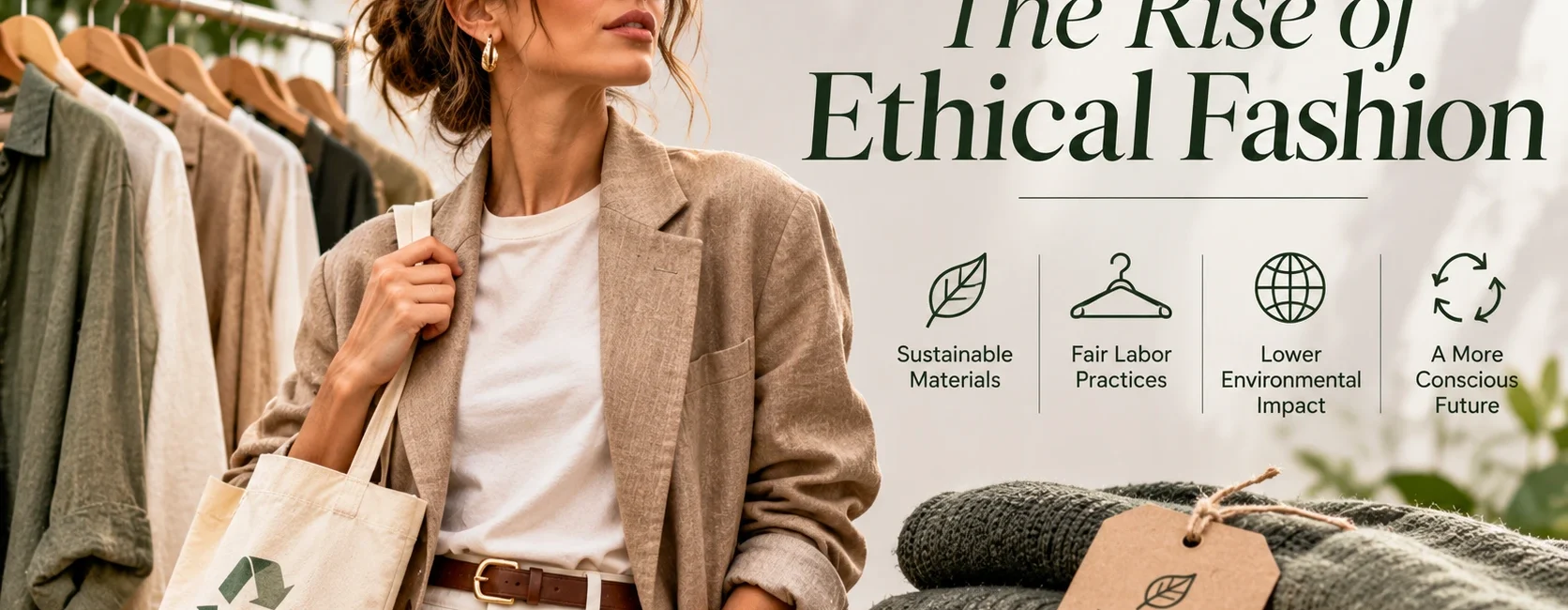
Ethical fashion has moved from niche to normal. Shoppers now ask where a garment was made, what it’s made of and what happens when they’re done with it, and brands feel the pressure. But the topic is crowded with vague labels, half-true claims and guilt. This guide takes a more practical route. Instead of telling you what to feel, it gives you three questions to ask before any purchase, a plain-English decoder for fabrics and certifications, an update on the US rules that are starting to change how clothes are made and recycled, and a realistic plan that works at any budget.
Why the Conversation Got Louder
The clothing most Americans buy ends up somewhere, and the numbers explain the pressure on brands. According to the US Environmental Protection Agency’s latest textile dataset (2018 figures), the US generated about 17 million tons of textile waste, roughly 5.8% of all municipal solid waste. About 2.5 million tons, or 14.7%, was recycled, while 11.3 million tons went to landfills. For clothing and footwear specifically, the recycling rate was 13%. Those figures are several years old, so treat them as a snapshot, not a live count, but the direction is clear: most clothing is not recycled, which is why laws and brands are now focusing on what happens after you wear it.
The Three-Question Test
Every ethical choice in fashion comes down to three questions. You don’t need to answer all three perfectly. You just need to ask them.
- What is it made of? (Fabrics and chemicals)
- Who made it, and under what rules? (Production and labor)
- How long will I really wear it? (Use, care and end of life)
Most of this article is organized around those three questions. Keep them in mind and the rest follows.
Question 1: What Is It Made Of?
No fabric is perfect. Each one trades off water, chemicals, energy, durability and what happens at the end of its life. Here’s a fair look at the common ones.
| Fabric | What’s good | What to watch | What to look for |
|---|---|---|---|
| Conventional cotton | Breathable, familiar, long-lasting when well made | Typically water- and pesticide-intensive | Organic or certified cotton |
| Organic cotton | Restricts synthetic pesticides and fertilizers | Can still use a lot of water; usually costs more | GOTS certification |
| Recycled polyester | Reduces demand for new petroleum, widely available | Still a plastic that sheds microfibers when washed, and blends are hard to recycle | Recycled-content verification such as GRS |
| Lyocell (e.g., TENCEL™) | Made from wood pulp, often in a closed-loop process, soft and breathable | Depends on how the forests are managed | Responsibly sourced wood pulp |
| Viscose / rayon | Soft, drapey, plant-based | Can involve harsh chemicals and forest sourcing concerns | Brands that disclose their pulp sourcing |
| Linen and hemp | Durable and relatively low-input crops | Wrinkles easily, can feel stiff at first | Certified or traceable sources |
| Wool | Long-lasting, naturally insulating, repairable | Animal welfare and land management vary | Responsible Wool Standard |
| Nylon and elastane blends | Stretch, shape and durability | Oil-based, and blends are difficult to recycle | Lower stretch percentages where you can |
Two practical takeaways:
- Blends complicate recycling. A 100% single-fiber garment is easier to recycle than a cotton-elastane mix. That doesn’t make blends wrong. Stretch can be what makes underwear and jeans last. It just means you should buy them knowing that care matters. Our review of Intimissimi seamless cotton panties, for example, lists an 83% cotton and 17% elastane blend and advises cold washing, skipping the dryer and avoiding bleach, which is exactly the kind of care that makes a blend last longer.
- The label is the starting point. The composition tag inside a garment tells you more than the product page. Check it for percentages, not just the fiber name.
Question 2: Who Made It, and Under What Rules?
This is the hardest question to answer from a product page, which is why certifications and laws matter.
Why production conditions became a fashion story
The 2013 Rana Plaza factory collapse in Bangladesh, which killed more than 1,100 garment workers, made supply chains impossible to ignore. Since then, shoppers, journalists and regulators have pushed brands to explain not just what they sell but how it’s made: wages, safety, working hours and subcontracting. The core issue is simple. When a garment is very cheap and trends move very fast, someone along the chain is often absorbing the cost.
The certification decoder
Certifications help, but each one covers only part of the picture. A sustainability guide breaks them down like this:
| Certification | What it focuses on | What it doesn’t tell you |
|---|---|---|
| GOTS | Organic fibers, tracked from farm to finished product, with environmental and social criteria | Not recycled content |
| OEKO-TEX Standard 100 | Testing for harmful substances in the finished fabric | Not labor conditions or environmental impact |
| Fair Trade Certified | Fair pay and safer working conditions for producers | Not fabric chemistry |
| bluesign | The production process, including chemicals, water and worker safety | Not fair pay or recycled-content claims |
| B Corp | The whole company’s performance on governance, workers, environment and community | Not individual products |
| Global Recycled Standard | Verifies recycled content and traceability | Not chemical safety or labor |
| Responsible Wool Standard | Treatment of sheep and land management | Not processing or labor |
The takeaway: one logo is not the whole story. A garment can be “OEKO-TEX tested” (safe to wear) without telling you anything about wages, and a brand can be a certified B Corp without every product being low-impact.
The US rules that are changing the game
Two developments matter for US shoppers.
1. Forced-labor import rules. The Uyghur Forced Labor Prevention Act was signed in December 2021, and enforcement began on June 21, 2022. It assumes that goods made wholly or partly in China’s Xinjiang region involve forced labor and bars them from entering the US unless importers prove otherwise with “clear and convincing evidence.” Xinjiang is a major cotton-growing region, and trade coverage notes that even a single cotton fiber traced to the region can make a product prohibited, so apparel brands have had to trace cotton much further back than they used to. For you, that means a brand that can name its cotton sources is worth more than one that can’t.
2. California’s textile recycling law. California’s Responsible Textile Recovery Act (SB 707), signed in September 2024, created the first statewide extended producer responsibility program for apparel and textiles in the US. In plain terms, producers must fund and organize collection, repair, reuse and recycling of their products at end of life, instead of leaving it to cities and taxpayers. According to a March 2026 legal analysis, California selected Landbell USA as the stewardship organization on March 1, 2026, producers were required to join and register by July 1, 2026, and full compliance is required once the plan is approved or by July 1, 2030, whichever comes first. Businesses under $1 million in global turnover and sellers of exclusively secondhand goods are exempt. Dates and details may change, so check CalRecycle for the latest.
What this means for you: expect more brands to offer take-back or recycling programs over time, and expect more scrutiny of what happens to clothes after you’re done with them. It also means you can ask a brand a pointed question: what’s your plan for this garment when I stop wearing it?
Spotting Greenwashing in 60 Seconds
Greenwashing is when a brand sounds more sustainable than it is. These are the usual tells:
- Vague words like “conscious,” “eco-friendly,” “green” or “natural” with no explanation
- A tiny “sustainable” line that includes only a small share of the collection
- “Recycled” with no percentage or proof
- One certification used as a halo for an entire brand
- No information on where or how items are made
- Constant new drops alongside sustainability claims
A good brand tells you the percentage of recycled content, where the garment was made, which certifications apply, and what to do with it afterward. If the product page can’t answer, the brand probably can’t either.
Question 3: How Long Will I Really Wear It?
This is where most of the impact lives, and it’s the question that costs the least. A garment’s footprint is spread across its lifetime, so the longer you wear it, the better it gets.
The cost-per-wear check
Divide the price by the number of times you expect to wear it. A $40 top worn four times costs $10 per wear. A $180 coat worn 120 times costs $1.50 per wear. Our Zara shopping guide makes the same point about buying fewer, better pieces, and its checks of fabric labels, seams and linings are the same checks you’d use for ethical shopping.
Price isn’t a proxy for ethics
A high price doesn’t automatically mean ethical production, and a low price doesn’t automatically mean the opposite. Luxury pieces can be hand-finished in Europe and still raise questions about materials or sourcing. Our Brunello Cucinelli monili hoodie review is a good example of a high-priced, long-lasting piece where the value argument rests on craftsmanship and wear, not on a sustainability certification. Judge each purchase on the three questions, not on the price tag.
The 30-wear test
Before you buy, ask whether you can picture wearing the item at least 30 times. Then run three checks:
- Does it go with at least three things you already own?
- Does it suit your actual life, not an imaginary one?
- Can you care for it easily?
Building a wardrobe where each layer has a job, like the ones described in our guide to a rain-to-cold commute wardrobe, is one of the most practical ways to buy less and wear more.
Wear the same thing differently
Re-wearing is the most ethical thing you can do with clothes. A few outfit formulas go a long way, and our outfit ideas for every occasion show how to restyle the same pieces for work, dinner or the weekend. Even a statement piece earns its keep this way: the formulas in our guide to styling a monili embellished hoodie turn one hoodie into six different outfits.
Care and repair
- Wash less, and wash cold. Heat and friction wear out fabrics, and synthetic fabrics shed microfibers in the wash.
- Skip the dryer when you can. Air-drying is gentler on elastic and seams.
- Fix small problems fast. A loose button or a loose hem is a five-minute repair.
- Look after shoes. Even small rules, such as resting elastic straps between wears and storing straps fastened, extend a shoe’s life, as our guide to slingback kitten heels explains.
Ethical Fashion on Any Budget: A Ladder
You don’t have to start at the top. Move up one rung at a time.
- Wear what you own. The most sustainable garment is the one already in your closet.
- Repair and alter. Tailoring can make something old feel new.
- Buy secondhand. Resale shops and online marketplaces extend a garment’s life.
- Buy fewer, better basics. Choose natural or certified fibers and sturdy construction.
- Choose transparent brands. Look for ones that publish factory lists, material percentages and take-back options.
- Invest in true staples. Coats, shoes and tailoring are worth paying more for if you’ll wear them for years.
- Pass it on. Donate, sell or recycle responsibly when you’re done.
Common Mistakes
- Buying a “sustainable” piece you won’t wear. Unworn clothes help no one.
- Throwing out working clothes to replace them with ethical ones.
- Trusting one label. Certifications cover specific areas only.
- Assuming natural always means better. Every fiber has trade-offs.
- Chasing perfection. Small habits beat occasional grand gestures.
Quick Answers
What does ethical fashion mean?
Clothing made with fair treatment of workers, responsible use of materials and consideration for what happens to it later.
Is ethical fashion the same as sustainable fashion?
They overlap. Ethical focuses more on people and conditions, while sustainable focuses more on environmental impact. Good brands address both.
What’s the most sustainable fabric?
There isn’t one. Responsibly produced linen, wool, lyocell and organic cotton are all strong options, and the best choice depends on what you need the garment to do.
Is recycled polyester good?
It reduces demand for new petroleum, but it still sheds microfibers and is hard to recycle in blends. Treat it as better than virgin polyester, not perfect.
Are certifications trustworthy?
They help, but each covers only part of the picture. Look for the ones that match your concern, such as GOTS for organic fibers or Fair Trade Certified for worker pay.
Does a high price mean ethical?
No. Judge by transparency, materials and longevity.
How can I shop ethically on a budget?
Re-wear, repair, buy secondhand and choose fewer, better pieces.
The Takeaway
Ethical fashion isn’t a purity test. It’s a habit of asking better questions: what is it made of, who made it, and how long will I wear it? Learn the fabric trade-offs, treat certifications as partial clues, watch how new US rules reshape take-back and traceability, and let wear count decide your value. Do that, and your wardrobe gets more ethical, more personal and often cheaper, all at the same time.